
On September 21, the Tongji Hospital-Chinese-German/German-Chinese Medical Society Student Exchange Program Meeting was held in the Administration Building of Tongji Medical College. The meeting was conducted in a hybrid format, with relevant heads from the Second Clinical College, Tongji Hospital, and the School of International Education, as well as student representatives from the clinical internship program from multiple German universities, including Heidelberg University, the University of Hamburg, and the Technical University of Munich, in attendance.
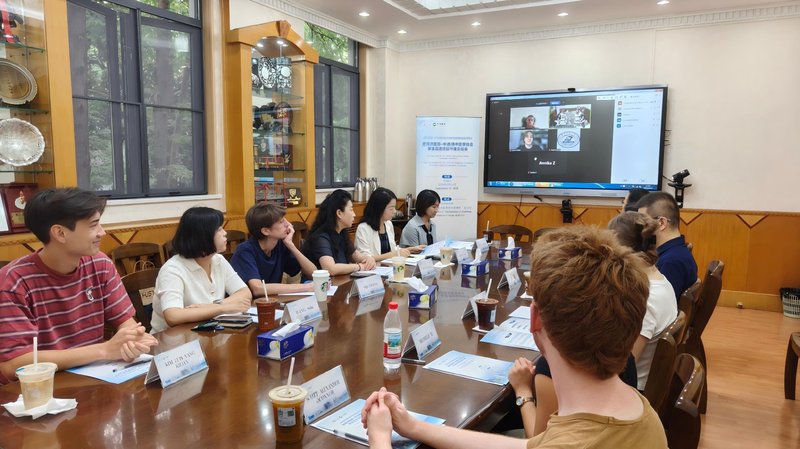
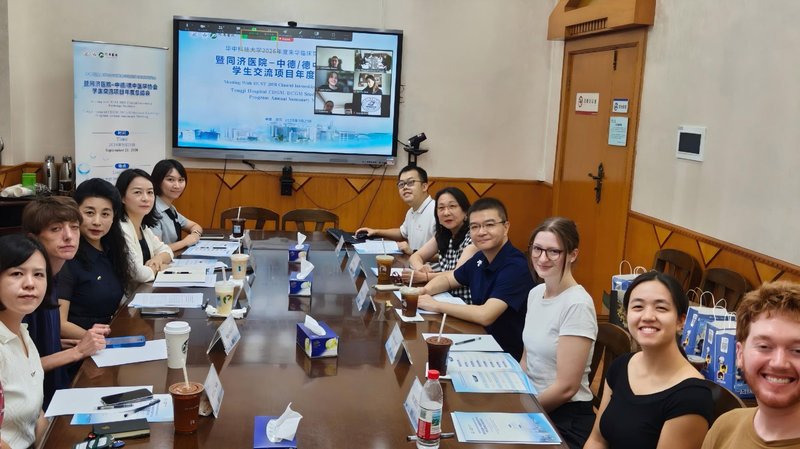
Sun Xufang, Vice Dean of the Second Clinical College, reviewed the history of Tongji Hospital's medical exchanges with Germany in her remarks, introduced the hospital's comprehensive medical strength and clinical teaching resources, and expressed the hope that international students would actively promote the program after returning to their home countries and come back for exchanges in the future as scholars. Tongji Hospital will, as always, support German students coming to the hospital for internships. Huang Chao, Vice Dean of the School of International Education, noted in his speech that our university has been deeply engaged in international medical education for many years, and by leveraging Tongji Hospital's high-quality clinical resources, has enhanced the international education brand of "Studying Medicine at Tongji." The scale of the international student clinical internship program has been steadily expanding, and its quality has continued to improve.
During the student sharing session, German student representatives exchanged their clinical internship experiences based on rotations across multiple departments, compared the differences between the Chinese and German healthcare systems, and shared their learning, life, and cultural experiences in Wuhan. The international students expressed that this internship had deepened their understanding of fine traditional Chinese culture and Chinese-style modernization, and voiced their willingness to return to China for further exchanges. In the free discussion session, participants fully exchanged views on issues such as optimizing the application process, providing pre-arrival information for coming to China, expanding channels for interaction between Chinese and German medical students, and improving the alumni liaison mechanism.
Since the establishment of the Chinese-German Medical Society in 1984, both the society and the hospital have attached great importance to student exchange and internship programs. Over the past 40 years, the hospital has maintained the tradition of exchanges with Germany, continuously improved service support, enhanced the internship program, consolidated the platform for Sino-German medical talent development, and contributed to the international influence of the hospital and university.


